
Basketball article
Private Basketball Coaching
By Tariq Evans
Private basketball coaching is focused instruction shaped around one player’s ability, habits and goals. It can address a particular weakness, help a begin
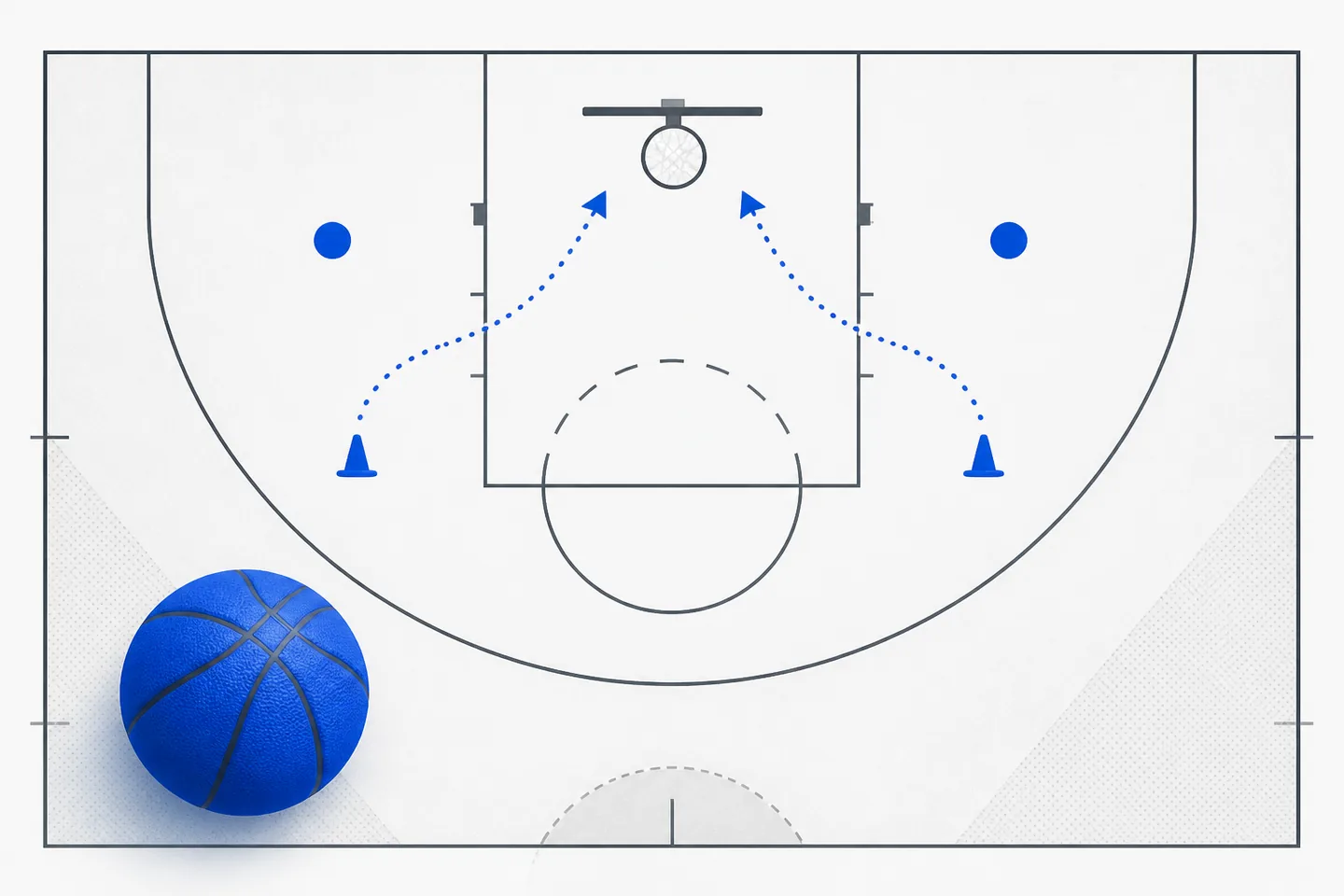
Private basketball coaching is focused instruction shaped around one player’s ability, habits and goals. It can address a particular weakness, help a beginner learn the basics or give a returning player a clearer way to practise. It cannot guarantee selection or replace team basketball. The value lies in identifying what to work on and how to practise it.
What private basketball coaching can address
A good session begins with observation rather than a long list of drills. The coach needs to see how the player moves, where control is lost, how the body is balanced, and whether a technical problem appears only when the pace increases. A player who can make a stationary crossover may still struggle to change direction against a defender. Someone who can shoot comfortably in an empty gym may need help creating space, stopping under control, or choosing a shot in a live situation.
Instruction should start with the skills a player can demonstrate, rather than assumptions about age or height. A structured coaching guide can help frame that discussion. Its player development curriculum provides a reference for planning the next stage of practice.
Start with the player’s actual question
Before arranging a session, put the goal into plain language. “Get better at basketball” is understandable, but it is too broad to guide useful practice. A more practical question might be:
- How can I handle the ball more confidently with my left hand?
- How can I finish when a defender cuts off my first move?
- How can I improve my balance and footwork before shooting?
- How can I make quicker decisions in pick-and-roll situations?
- How can I defend without reaching or losing position?
- How can I prepare for a team environment without neglecting enjoyment?
Private coaching is most useful when the coach and player agree on a small number of priorities. Too many corrections create noise. A session should leave the player with a clearer feeling for one or two important ideas, along with a manageable way to revisit them independently.
Technique should remain connected to the game
First comes a simple version of the skill. This allows the player to understand the movement and establish control. Next comes a change in speed, direction, distance, or angle. Finally, the skill should appear in a decision-making situation: a closeout, a recovering defender, a passing window, a shot after movement, or a finish from an unfamiliar side.
Consider shooting. A player may begin close to the basket, concentrating on balance, hand placement, and a repeatable release. The next step might include receiving the ball, stopping under control, or moving laterally before the shot. The final layer could ask the player to read a defender and choose between shooting, driving, or passing. The purpose is not to make every session exhausting. It is to make the practice relevant.
The same principle applies to ball handling. Stationary dribbling can develop touch and coordination, but the player also needs to look up, change pace, protect the ball, and respond to pressure. Footwork drills can improve control, but they become more meaningful when the player must pivot away from a defender or create an angle to pass.
Give the less comfortable hand and foot regular, purposeful practice. Introduce layups, pivots and passes on both sides, then add pace while maintaining control. Avoid calling every unfamiliar movement a permanent weakness; identify the specific action that needs attention.
For younger players, development includes enjoyment
A lesson for a young player should be challenging while allowing questions, mistakes and repeated attempts. Ask what the child wants to learn. A parent may see a technical weakness while the player wants to feel more comfortable joining a game; both aims deserve discussion.
Consider private lessons alongside informal play, team commitments, rest and other activities. Youth participation guidance can help parents frame questions about a suitable schedule. The guidelines explain the reasoning and participation considerations in detail.
Parents can ask how sessions will suit the player’s stage and how progress will be discussed. Look for respectful feedback and clear ways to raise concerns. A published coaching code offers another reference. Those principles provide a useful standard when evaluating a coaching environment.
How to assess a coach
A polished profile or confident promise is not enough to establish that a coach is the right fit. Ask practical questions about the coaching process:
- How is the first session adapted to the player?
- How are goals agreed and revisited?
- How does the coach balance drills with game-like decisions?
- How are mistakes and feedback handled?
- What information should a parent or player share about existing team commitments or physical limitations?
- How does the coach communicate boundaries and safety expectations?
Look for specific explanations and realistic expectations. Selection, scholarships and playing time depend on factors beyond private lessons. A coach should describe the process, identify areas of focus and explain how progress will be observed without promising those outcomes.
It is also worth checking whether the coach understands the difference between a skill trainer and a team coach. Individual work can improve tools and awareness, but a player still needs to learn spacing, communication, defensive responsibilities, and shared decision-making with teammates. Private coaching should complement team participation, not encourage the player to treat individual statistics as the whole game.
During a session, notice whether the coach adjusts an exercise when it is too easy or repeatedly unsuccessful. Moving closer to the basket, slowing the movement or reducing the number of choices should serve a clear purpose. Ask the player to explain what they saw before choosing a pass or drive; the answer may reveal more than another repetition.
For a young player, clarify supervision arrangements and how parents receive feedback. The player should know whom to approach if something about a session makes them uncomfortable.
Make practice specific and repeatable
After a session, the player should know what to practise and what to notice. “Work on your handle” is vague. “Use the left hand while keeping the eyes forward, then change pace after the cone” is easier to apply. A useful practice plan can be short:
- Begin with a gentle warm-up and movement preparation.
- Choose one technical focus, such as balance on a jump stop.
- Repeat the skill on both sides where appropriate.
- Add movement, pace, or a simple decision.
- Finish with a game-like action that tests the focus.
- Write down one observation for the next session.
Progress can be tracked without inventing complicated measurements. Note whether the player stayed balanced, used both sides, saw the floor before dribbling, protected the ball, or made a decision without freezing. These observations are often more useful than chasing an impressive number of shots or assuming that fatigue equals improvement.
Video can sometimes help a player notice spacing, posture, or timing, but it should be used thoughtfully and with appropriate consent, especially for minors. A short clip may reveal a pattern that is difficult to feel in the moment. It should support coaching, not turn every practice into a performance review.
Practical next steps
Agree on a review point. Repeat a comparable task under similar conditions, then discuss whether the skill appears in games. Check that the player understands the feedback and can manage the practice between lessons. If progress is unclear, simplify the goal or adjust the exercise before adding more sessions.