
Basketball article
Effective Basketball
By Tariq Evans
Effective basketball is built from repeatable decisions rather than occasional difficult plays. A team needs sound spacing, controlled ball movement, purpo
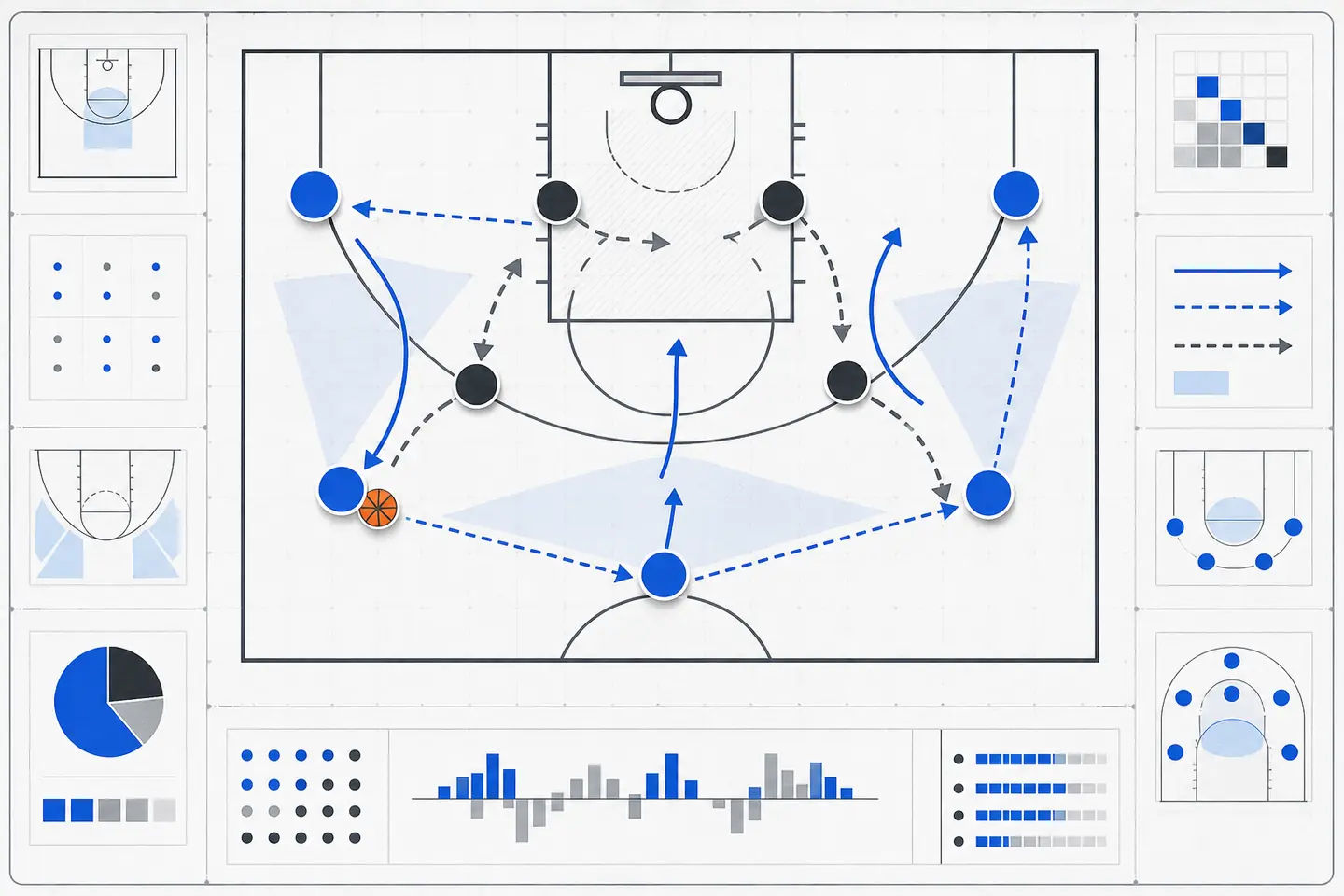
Effective basketball is built from repeatable decisions rather than occasional difficult plays. A team needs sound spacing, controlled ball movement, purposeful defence and players who understand what each possession requires. The scoreboard records the result, but the quality of the work is visible in the shots created, turnovers avoided, stops completed and responses to mistakes.
Coaches can make those qualities easier to learn by defining a few observable standards. Players then know what to do before the ball arrives, where help should come from and how to reset when a possession breaks down. The aim is not to remove creativity. It is to give every player a reliable base from which to read the game.
Define What Good Play Looks Like
Broad instructions such as “play harder” or “make better choices” are difficult to act on. A useful standard names the action and the moment when it matters. Instead of demanding more effort, a coach might require every defender to call screens early and finish the possession with a rebound. Instead of asking for unselfish play, the team might agree to move the ball whenever a second defender commits.
Choose a small set of priorities that fits the team’s style. A side that wants to play quickly may focus on securing the defensive rebound, finding an outlet and filling wide lanes. A team that relies on half-court execution may value patient spacing, firm screens and passes delivered before pressure closes the lane.
- Shot quality: favour open attempts created within a player’s comfortable range.
- Ball security: see pressure early and keep a safe passing option available.
- Defensive completion: communicate, contest without losing balance and rebound.
- Response: move immediately to the next assignment after an error.
These standards separate decisions from outcomes. A balanced open shot can be the correct choice even when it misses. A made shot can still be a poor choice if it ignores an open teammate and depends on a heavily contested attempt.
Create Better Shots
Prepare Before the Catch
A player should scan the rim, nearby defenders and likely passing options before receiving the ball. Early information makes the next action quicker. If the defender stays back, the player may have a balanced shot. If the defender closes too hard, the space behind that movement may offer a controlled drive. If help shifts across, the pass should leave before the lane becomes crowded.
Footwork supports every option. Shooters should arrive balanced, organise their feet and keep their release repeatable. Drivers need a stable first step and enough control to stop, pivot or pass. Work on Basketball shooting and related fundamental skills is most useful when practice includes the catches, changes of direction and defensive pressure found in games.
Protect the Ball
Ball security begins with position. The handler stays low, keeps their body between the defender and the ball, and avoids drifting towards the sideline without an exit. Eyes should remain up so that help defenders, cutters and outlets stay visible.
Against close pressure, simple actions are usually the safest. A retreat dribble can restore space. A pivot can improve the passing angle. Reversing the ball can move the defence farther than another crowded dribble. Picking up the ball without locating a receiver turns manageable pressure into a trap.
- One defender crowds: protect the ball, change pace or retreat.
- Two defenders commit: pass before the trap closes.
- The first lane is denied: pivot and reverse the direction of play.
- Help blocks the drive: find the player that the helper left.
Finish With Balance
Finishing near the basket depends on balance and timing more than force. The attacker should control the final steps, keep sight of the target and gather securely when traffic makes a loose pickup risky. The rim can protect the ball: a far-hand finish or reverse lay-up may place the defender on the other side of the basket.
Practice should include both hands, jump stops, stride stops and decisions after a defender appears. The finish is only one option. If the help defender arrives early, a short pass or kick-out may create the clearer shot.
Keep the Team Connected on Defence
Communicate Before the Crisis
Defensive talk must arrive before the action. Players can call the screen, identify a cutter, announce help and claim the next match-up. Short, agreed words are easier to hear and act on than long instructions. Every call should have a known response, including who protects the rim and who covers the first pass after help.
Good team-defense communication and positioning principles also require players away from the ball to move together. When one defender helps, the others cannot remain fixed. They must cover the most immediate threats, then recover as the ball moves.
End the Possession
A contest does not complete a defensive stop. When the shot goes up, each defender should locate an opponent, establish legal contact and pursue the rebound. Guards share this responsibility because long attempts often produce long rebounds. The player nearest the ball can call the shot, while teammates protect the paint and find bodies.
Transition responsibilities should also be clear before the rebound. Some players may pursue the ball while others move back to stop an immediate counterattack. The exact balance depends on the team, but uncertainty leaves both jobs unfinished.
Apply Pressure Without Gambling
Useful pressure limits easy choices while keeping the defence connected. The on-ball defender can influence the handler towards a chosen side, contest passing lanes and make catches less comfortable. Reaching across the body or chasing every possible steal usually damages balance and exposes the next line of defence.
Pressure drills should reward correct positioning, early calls and recovery after the offence gains an advantage. pressure-offense drills focused on poise and turnover reduction can also help attackers rehearse safe outlets and decisive passes rather than treating every press as a dribbling challenge.
Design Practice Around Decisions
Isolated technique has value, but players also need to use skills against realistic movement and resistance. A shooting exercise becomes more useful when the player must sprint into position, read a closeout and move into defence after the attempt. A passing drill improves when receivers must create an angle while a defender denies the obvious route.
Small-sided games give players frequent decisions with less waiting. Changing the scoring rules can highlight a habit: award the possession for a paint touch followed by an open pass, require a defensive rebound before points count, or restart when nobody communicates a screen. The condition should serve the lesson and disappear once the habit transfers to normal play.
- State one clear purpose before the drill begins.
- Describe the action that demonstrates success.
- Let players repeat the situation at game pace.
- Pause briefly to correct one important detail.
- Run the drill again so players can apply the correction.
Conditioning should support the same movements. Short court efforts can include acceleration, stopping, lateral movement, jumping and recovery into the next assignment. Quality matters: when posture, landing control or decision-making deteriorates, adding more repetitions may only rehearse poor movement.
Recovery belongs in the plan as well. Easier movement, suitable food and regular sleep help players arrive ready to learn. Coaches should respond to persistent soreness, unusual fatigue or declining movement quality by adjusting the workload rather than using conditioning as punishment.
Prepare for Pressure and Mistakes
Late-game control is easier when responsibilities have already been rehearsed. Players should know who receives an inbound pass, where the safety outlets stand, who protects against a quick counterattack and who communicates the clock. Clear roles reduce hesitation without preventing a player from making the best available read.
Mistakes need a rehearsed response too. After a turnover, the nearest player should slow the ball while teammates protect the basket and find match-ups. After a missed rotation, players must communicate the next coverage instead of debating the previous one. The correction can wait until the immediate danger has passed.
- Turnover: recover, stop the ball and protect the basket.
- Missed shot: follow the team’s rebound and transition assignments.
- Broken coverage: call the next match-up and rebuild the defensive shape.
- Poor decision: identify the better option, then rehearse it on the next repetition.
Measure Habits, Not Just Results
Useful review focuses on actions the team can repeat. Coaches can track live-ball turnovers, open shots created, defensive possessions finished with a rebound, successful advances against pressure and recoveries after mistakes. The list should remain short enough to record consistently.
Compare the team with its own earlier performance rather than treating one game as a final judgement. Film can show whether the same error keeps returning, whether spacing survives under pressure and whether communication begins early enough. Practice can then recreate the specific situation that needs work.
Effective basketball is visible when players recognise the problem, choose a sound response and stay connected to the next action. Clear standards, decision-led practice and honest review turn those behaviours into habits that can hold up throughout a game.