
Basketball article
Basketball Strategies
By Tariq Evans
Basketball strategy turns individual skill into coordinated decisions. A useful plan tells players where to stand, what advantage to seek and how to respon
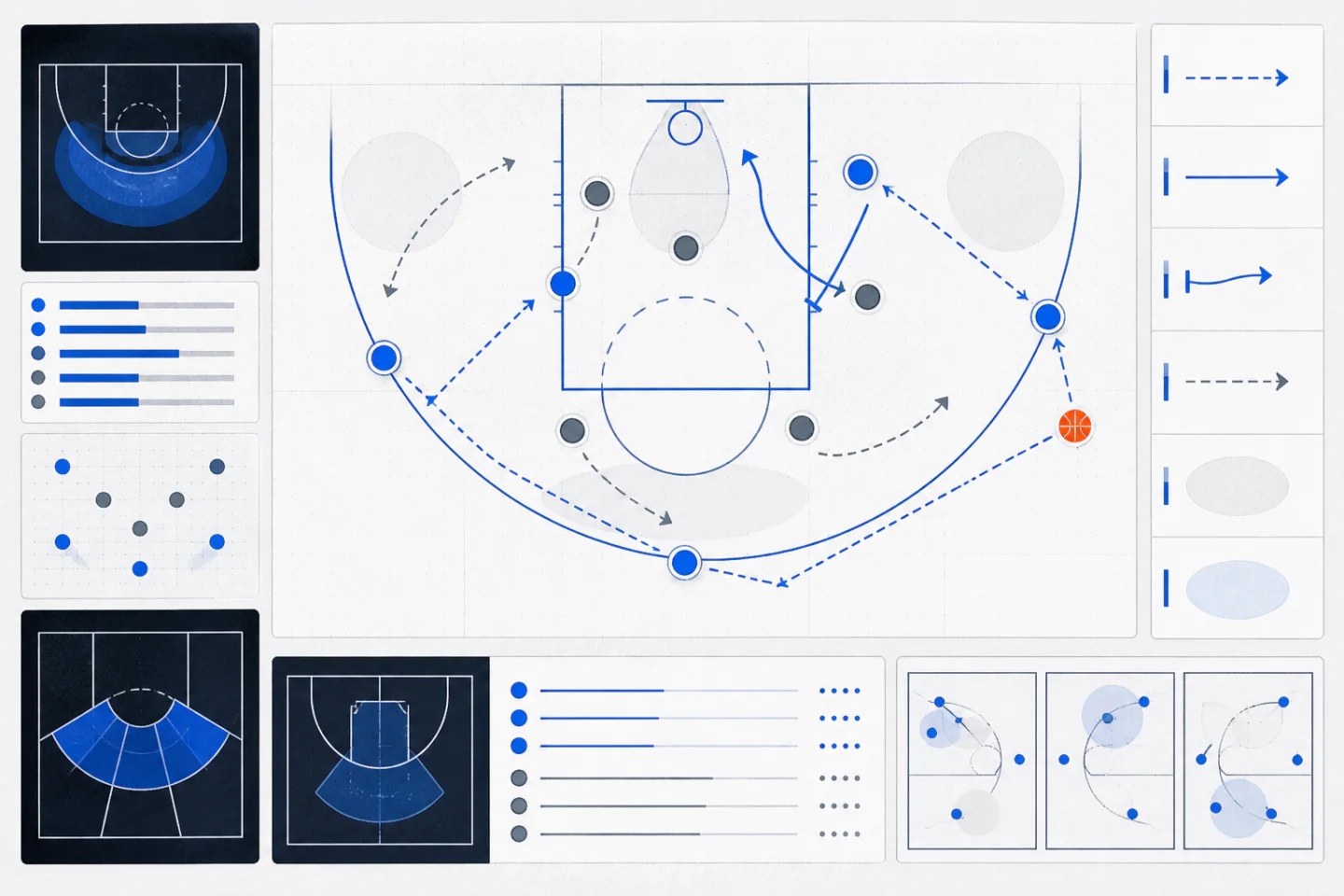
Basketball strategy turns individual skill into coordinated decisions. A useful plan tells players where to stand, what advantage to seek and how to respond when the first action fails. It should be easy to recall under pressure and flexible enough for different opponents. Coaches should adjust its pace, terminology and complexity to suit their team.
Create Space and Make Quick Decisions
Good spacing prevents one defender from covering two attackers. In a five-out alignment, all players begin outside the paint. In a four-out, one-in alignment, one works near the basket while four remain around the perimeter. Both shapes should leave clear driving lanes and passing angles.
Spacing must change as the ball moves. When a teammate drives, nearby players can relocate to a corner, slide along the three-point line or cut behind a defender who turns towards the ball. Two players should not occupy the same passing lane. At least one player should also remain in a safety position so a missed shot or turnover does not produce an uncontested fast break.
Players can simplify decisions with a shot-pass-drive check as they receive the ball. Before the catch, they should scan for the nearest defender, available space and help near the basket. After the catch, they should act before the defence resets. A player who draws two defenders should pass before the trap closes; the next receiver should attack the new gap or move the ball again.
Build a Reliable Offence
Use Paint Touches and Ball Reversals
A half-court possession should aim to move the ball into the paint by a drive, post entry, cut or pass to a rolling screener. This forces defenders to turn, help and recover. If the lane closes, the attacker can pass to an open teammate rather than force a crowded shot.
When the first action produces no advantage, reverse the ball from one side of the court to the other. The defence must shift, which can open a baseline cut, handoff or second drive. Keep the next action immediate and purposeful. Holding the ball allows defenders to regain position.
Run Transition with Defined Lanes
Transition offence starts with a secure defensive rebound and a clean outlet pass. Outside players sprint wide, one runner attacks the front of the rim and a trailing player follows through the middle. This spreads the defence vertically and horizontally without crowding the ball-handler.
The ball-handler should attack a clear lane, pass ahead when a teammate has an advantage or slow down when the defence is set. Use the same lane rules after made and missed shots to make the early offence easier to recognise.
Screen with Purpose
A legal screen depends on timing and angle. The screener arrives under control, becomes stationary and blocks the defender's path. The ball-handler waits, then passes close enough that the defender cannot slip through.
In a pick-and-roll, the ball-handler can drive, pass to the rolling screener or find a teammate when help leaves the weak side. A screener who can shoot may move into open space instead of rolling. Away from the ball, teammates must preserve passing lanes and cut behind defenders who overhelp.
Defend as a Unit
Set Clear Man-to-Man Rules
The on-ball defender should guide the attacker towards the team's planned help while staying balanced enough to contest a shot. Off-ball defenders see both their opponent and the ball, move towards the lane when help is needed and recover as the pass travels.
Every screen coverage needs a shared call. Teams may switch assignments, send the on-ball defender over the screen, or have the screener's defender show briefly before recovering. The exact choice matters less than five players executing the same choice. The defender nearest the screen should call it early and name its direction.
Keep Zone Defence Connected
A zone assigns areas rather than fixed matchups, but players still need to account for opponents entering their space. In a 2-3 zone, the top defenders pressure the perimeter and protect the high post. The lower defenders cover the corners, blocks and baseline while the middle remains ready to contest inside.
As the ball travels, the whole zone shifts. When it reaches the high post, the nearest defender contests while teammates close gaps, track cutters and prepare for the next pass. Against an overload or skip pass, a defender may match an attacker briefly before returning to the original shape. Zone players must find an opponent when a shot goes up; guarding an area does not remove the need to box out.
Protect the Paint Without Reaching
Paint defence begins before the drive. The primary defender angles the ball towards help, while the helper arrives early with a balanced stance and raised hands. Showing the chest and contesting vertically is usually safer than swiping down at the ball. If the attacker stops or pivots, defenders should remain grounded and avoid leaning into the shot.
Help defenders also need a recovery rule. The lowest defender may briefly stop a cutter or rolling player, then return towards an open shooter once the pass leaves the lane. Early communication makes that rotation possible.
Finish Possessions with Rebounds
When a shot goes up, defenders should call it, locate the nearest opponent and make controlled contact before pursuing the ball. A strong box-out uses a low stance and wide base to hold space without grabbing or leaning. Guards share this responsibility because perimeter players often chase long rebounds.
- Secure the rebound with two hands whenever possible.
- Bring the ball to a protected position before looking for the outlet.
- Pass only after balance and a clear target are established.
Offensive rebounding needs assigned roles. Selected players attack likely bounce areas while at least one teammate retreats to protect against transition. A rebounder surrounded by defenders can pass out to reset the offence instead of forcing a difficult put-back.
Adjust to the Opponent
Scouting should produce simple decisions. Identify which defenders struggle to contain movement, where help comes from and which attackers the opponent relies on. Then choose one or two responses that fit the team's system.
- Against a slow perimeter defender, use a high screen or clear a driving lane.
- When help comes from the corner, prepare the corner player for an immediate pass.
- Against a crowded paint, use wider spacing, quicker reversals and cuts behind watching defenders.
- If an opponent repeatedly scores from a ball screen, change the coverage and state who contains the handler and roller.
Make one clear adjustment at a time. If it works, keep it until the opponent responds. If it fails, identify whether the idea was wrong or the execution broke down. Coaches should also account for fatigue and foul trouble without assuming that a single mismatch explains every possession.
Use Precise Communication
Short calls are easier to hear and act upon. Teams should define a small vocabulary for screens, switches, help and ball movement, then use the same words in practice and matches. A call should name both the threat and the response: for example, the direction of a screen followed by the chosen coverage.
Communication continues after the first action. Defenders announce cutters and confirm when they recover. Attackers identify open space and call for the next pass. Feedback between possessions should describe the required change rather than blame a teammate. Saying that a switch needs to come earlier gives the team something it can apply immediately.
Practise Decisions, Not Patterns Alone
Drills should reproduce the spacing, pressure and choices found in a match. Begin by teaching an action without resistance, then add defenders and a clear scoring condition. Small-sided games create frequent decisions: a three-on-three side pick-and-roll drill, for example, can ask the handler to choose between a drive, a pass to the screener and a pass across the court.
Constraints can sharpen the intended habit. A short possession clock encourages quicker reads; a dribble limit rewards cuts and passing; an extra point for a paint touch reinforces purposeful penetration. Use one constraint at a time and remove it when players begin exploiting the rule instead of learning the skill.
Film review should be equally focused. Select a few possessions that show the same decision, ask players to identify the cue they missed, and agree on one adjustment for the next session. Track a small set of observable actions, such as turnovers caused by spacing, successful defensive rotations or rebounds secured after contact. Review whether the behaviour changed rather than using numbers as a verdict on effort.
Finish practice with a short, game-like period under score and time pressure. Players should know the situation, the first option and the fallback if it is stopped. This connects instruction to decisions made when the match becomes unsettled.