
Basketball article
Basketball Key
By Tariq Evans
The basketball key is the marked rectangle between the baseline and the free-throw line. It is also called the lane or the paint. Much of the game’s close-
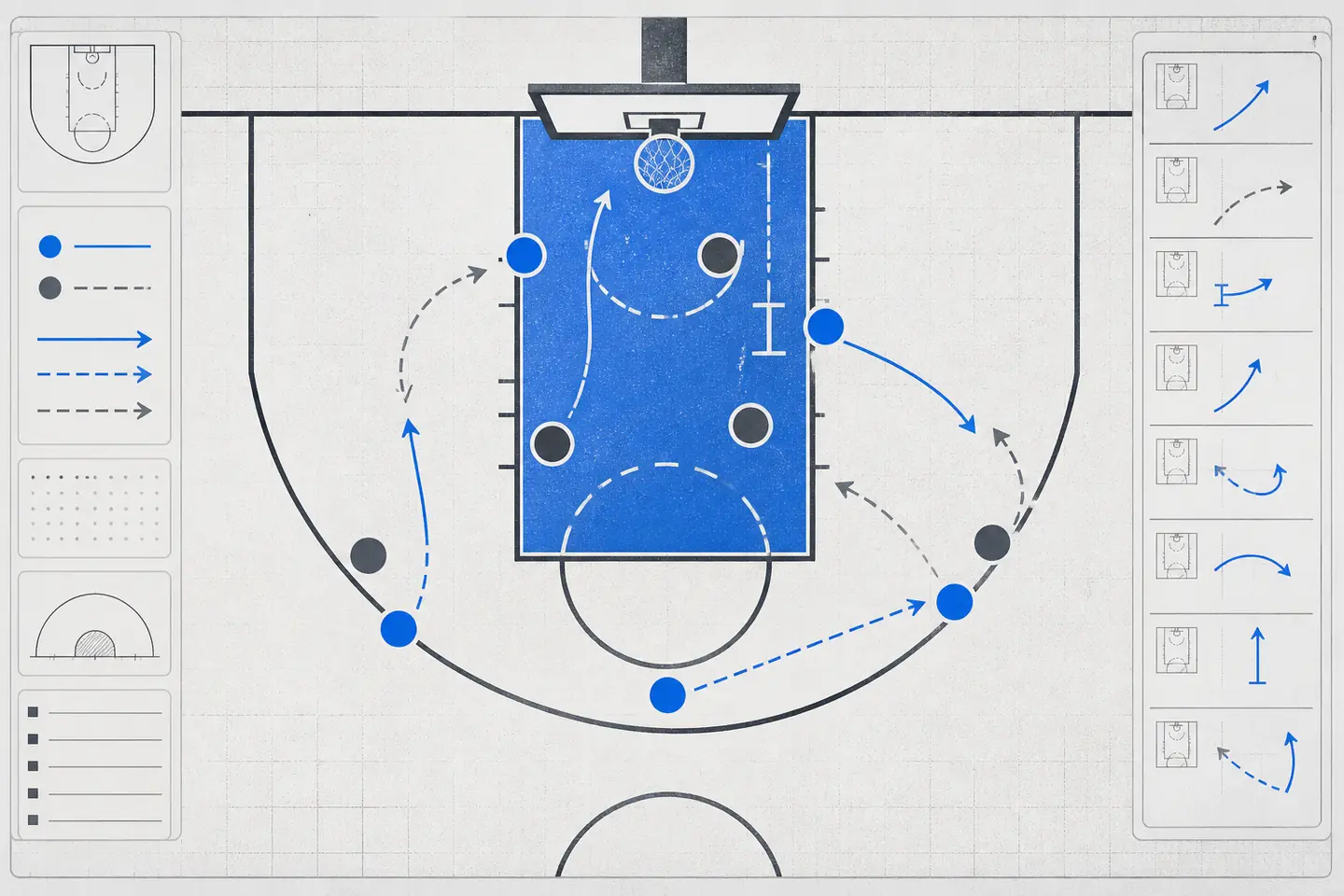
The basketball key is the marked rectangle between the baseline and the free-throw line. It is also called the lane or the paint. Much of the game’s close-range action happens here: post players establish position, drivers attack the basket, defenders help, and rebounders compete for space.
The exact dimensions and nearby markings vary between competitions, so players and coaches should use the rules and court markings that apply to their game. The principles are more consistent. Good play in the key depends on spacing, balance, early decisions and legal contact.
Reading the court markings
Two lane lines form the sides of the key. The baseline closes the end beneath the basket, and the free-throw line marks the top. Small marks beside the lane show where players may stand during free throws. Some courts also have a semicircle beneath the hoop that affects how certain charging and blocking decisions are judged.
The low blocks are the marked areas near the baseline on either side of the lane. A post player often tries to receive the ball there. The elbows are the corners where the lane lines meet the free-throw line. These are useful places for screens, passes and short shots. The high post is the central area around the free-throw line, while the short corners sit near the baseline just outside the lane.
Rules players need to check
Time in the lane
Many rulesets limit how long an attacking player may remain in the key while their team controls the ball in the front court. This is commonly known as the three-second rule. The precise count and its exceptions depend on the competition, particularly when a player is leaving the lane or a shot is being attempted.
Players can avoid preventable violations by moving through the key with purpose. A post player can step out, re-establish position and present a new passing target. A cutter should clear to an open perimeter space if the pass does not arrive. Coaches should confirm whether their competition also restricts an unguarded defender’s time in the lane.
Legal position and contact
Being inside or outside a marked arc does not make all contact automatically legal or illegal. Officials may consider whether a defender established position, whether either player moved into the other’s path, and how the contact affected play. Players should therefore arrive early, stay balanced and avoid sliding beneath an airborne opponent.
Free throws
Free-throw restrictions govern where the shooter and other players stand and when they may enter the lane. The release of the ball, contact with the rim and the location of each player can all matter. Because these details differ, a team should practise the exact procedure used in its matches rather than relying on habits learned elsewhere.
Using the key in attack
The key is valuable space, but filling it with several stationary players makes scoring harder. Teammates away from the ball should leave a clear route to the basket, then cut when a defender looks away or moves to help. If one player posts near the block, another can occupy the opposite side, an elbow or a perimeter position rather than standing beside them.
Receiving in the post
A post player should establish a wide, balanced stance and show the passer a clear target. Keeping the body between the defender and the ball helps protect the catch without holding or pushing. Before the pass arrives, the receiver should look over both shoulders to locate the basket, nearby help and open teammates.
After catching, there is no need to rush. The player can keep the ball secure, identify which side the defender favours and choose a simple response. Options include turning towards the middle, moving towards the baseline, passing back out or finding a cutter. A controlled pivot is more useful than a complicated move attempted without space.
Driving and cutting
A driver should enter the key with a plan but remain ready to change it. If the path to the basket stays open, a balanced finish off the backboard may be available. If a help defender closes the gap, the better choice may be a short stop, a pass to the space that defender left, or a pivot away from pressure.
Cutters help by timing their movement. Cutting too early can bring another defender into the driver’s path. A useful cut begins when the defender turns towards the ball, overplays a passing lane or leaves the basket side exposed. Once the opportunity passes, the cutter should clear the lane so the next action has room.
Screens near the lane
A screener should stop in balance and allow the defender room to avoid contact under the applicable rules. After the screen, the player can move towards the rim, open into free space or seal a defender after a switch. The ball handler should wait for the screen to be set and pass close enough to make the defender choose a route.
Defending the key
Defence begins before the ball reaches the paint. Pressure on the passer, an early stance and clear communication can prevent an easy post catch or drive. The nearest help defender should see both the ball and the player they are responsible for, while remaining close enough to recover if the ball is passed out.
Against a drive, the first defender tries to stay between the ball and the basket. A helper may step across to protect the rim, but that rotation leaves another attacker open. Teammates must respond by covering the next pass and then recovering as the ball moves. A successful possession depends on several linked movements, not one dramatic block.
When contesting a close shot, defenders should stay vertical, keep their balance and avoid swinging down at the ball. A late reach often creates contact without changing the shot. Against a post player, steady position and active feet are safer than leaning, grabbing or trying to dislodge the opponent.
Rebounding in and around the key
Rebounding starts when the shot goes up, not when the ball comes off the rim. A defender should first locate the nearest opponent, turn to make legal body contact and create space between that player and the basket. Only then should the defender pursue the ball. Watching the flight while allowing an opponent a free run often leads to an attacking rebound.
The ball does not always fall directly beneath the hoop. Shots from an angle may travel towards the other side, while shorter attempts can stay close to the basket. Players outside the key should move towards open rebounding lanes instead of gathering under the rim. A rebounder who gains control should land in balance, protect the ball with two hands and look for a safe outlet pass.
Practical drills for paint play
Good drills connect footwork to a decision. Repeating a move without a defender can introduce the movement, but the activity should soon include a cue, a passing option or controlled pressure.
- Catch, scan and choose: A player receives near the block, checks both shoulders and responds to a coach or teammate showing middle help, baseline help or no help. The player then turns, passes or finishes.
- Drive and read: A ball handler attacks from the wing while one defender guards the ball and another begins near the key. The helper either stays home or steps across, and the driver must finish or pass accordingly.
- Hit, find and pursue: On a shot, defenders locate an opponent, establish a legal box-out and then rebound with two hands. Rotate starting positions so players learn different angles.
- Three-player spacing: One player posts, one starts with the ball and one moves on the weak side. The group scores only after a purposeful cut, post entry or pass created by help defence.
Keep the space and pressure suitable for the players. Beginners need time to stop, pivot and see their options. More experienced groups can use fewer dribbles, a shorter decision time or an extra defender. Stop the drill briefly when the same problem affects several players; otherwise, give individual feedback while the activity continues.
A simple checklist during play
Players near the basketball key can use a short set of questions:
- Where are the ball, the basket and the nearest help defender?
- Am I creating space or blocking a teammate’s route?
- Can I catch, stop and pivot without losing balance?
- If I help on defence, who covers the next pass?
- When a shot goes up, have I found an opponent before chasing the ball?
Coaches can review these questions one at a time rather than giving several corrections at once. Clear habits make the key easier to read: move through it with purpose, arrive in legal position, protect the ball, and decide according to what the defence gives you.