
Basketball article
Youth Basketball Feedback: One Observable Cue at a Time
A player loses their opponent on a cut. The coach has only a moment before the next repetition begins. “Pay attention” names a problem, but gives the…
A player loses their opponent on a cut. The coach has only a moment before the next repetition begins. “Pay attention” names a problem, but gives the player little to do. “Before the pass, turn your head so you can see the ball and your opponent” gives them an action they can try immediately. That difference is the heart of useful youth basketball coaching feedback: describe what happened, choose one observable adjustment and give the player another chance to use it.
Turn criticism into a usable cue
A corrective cue names an action the player can control, preferably at the moment it needs to happen. “You keep making bad passes” is a judgement about several plays. “When the defender steps into the lane, pivot and pass to the teammate behind you” gives the player a response to a visible situation. The coach can watch for that response on the next attempt, even if the pass is intercepted or the shot is missed.
Positive Coaching Alliance recommends feedback that is specific and based on information, along with clear, concise instructions. It also advises coaches to focus on behaviour and skills rather than labelling the athlete. That makes a useful check before speaking: Could someone watching the next repetition tell whether the player tried this cue? If the answer is no, make the instruction more concrete. Its guidance on coach feedback and instructions offers the same practical emphasis.
Keep recognition equally precise. “You checked over your shoulder before the cut and stayed with your player” tells a defender what to repeat. It need not accompany every correction. In a basketball example, Positive Coaching Alliance shows how unrelated praise around a defensive correction can obscure the one action the coach wants. Give the correction plainly, then acknowledge the change when it appears. Its discussion of the basketball defence example makes that distinction clear.
Use the huddle to set the cue, then coach the next play
A huddle is useful when several players need the same instruction. Describe the situation, show the action and return to play quickly. On court, shorten the language further. Players may only have time to hear a familiar phrase before the next pass or change of possession. Agree on that phrase during a pause, so it carries a clear meaning when the drill restarts.
Defence: close out in balance
Huddle script: “When the ball is passed to the wing, move towards the receiver. Shorten your steps as you get close, stop in balance and raise a hand. We’re watching the final steps, not whether every shot misses.” Demonstrate the last few steps once, then run the drill.
On-court cue: “Short steps as you arrive.” If a defender rushes past the shooter, repeat the situation and use the same cue. If the defender stops in balance but the shooter scores, recognise the action: “You slowed your steps and stayed in front. Use that closeout again.” The shot result does not erase the improvement.
Passing: read the defender before releasing the ball
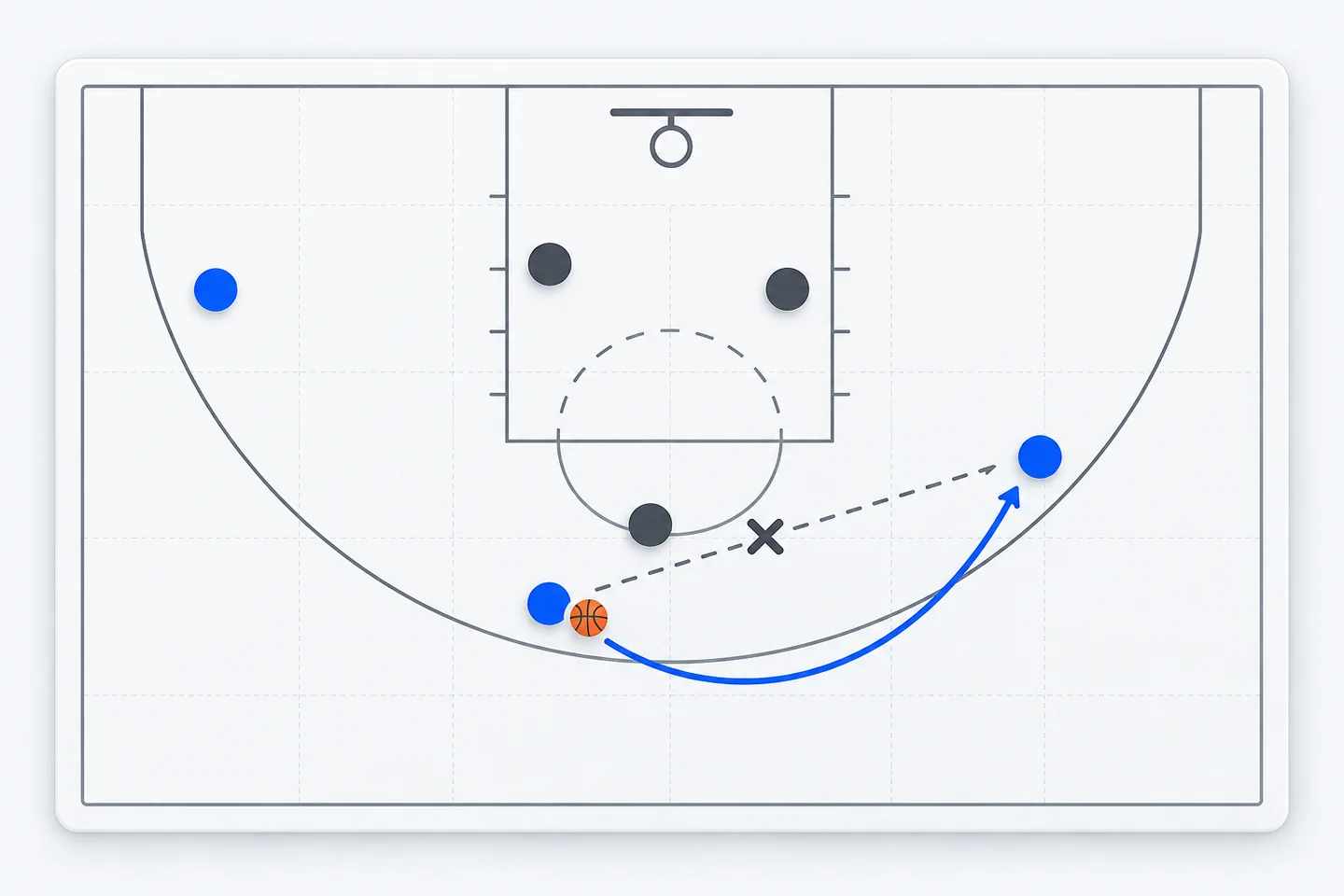
Huddle script: “In this drill, the defender can take away the first passing lane. Look at that lane before you throw. If the defender steps into it, pivot until you can see the teammate behind you.” The group now has one decision to practise rather than an instruction to avoid turnovers at any cost.
On-court cue: “See the lane first.” After a turnover, the coach might ask, “Where was the defender when you released it?” If the player saw the defender but could not find another angle, the next cue can be “Pivot to see your outlet.” Give that player a prompt return to the same situation so the conversation leads to an attempt.
The Jr. NBA’s Starter Practice Plans include a drill in which an attacker reads a coach’s position and chooses whether to continue towards the basket or pull up. Its instruction is to give feedback on the decision. The same distinction helps in a passing drill: discuss what the player saw and chose, rather than judging the play only by whether a teammate caught the ball.
Teamwork: make the help visible and audible
“Work together” may be a sound aim, but it is too broad to serve as a cue during a possession. Choose the teamwork action that is missing. If defenders are late to support one another, the huddle script might be: “When the ball handler drives past the first defender, the nearest helper calls ‘help’ and moves into the lane. The next defender names the player they are covering.” The coach can then listen for the call and watch the movement.
On-court cue: “Call help early.” After the play, a teammate might say, “I heard your help call before the drive reached me, so I could cover your player.” If the call came after the move, the teammate can keep the correction specific: “Call as you start to move; I need time to switch.” These comments identify timing and responsibility without blaming the player who was beaten.
Ask players what they saw
Before correcting a decision, invite a brief account from the player. “What did you see when the pass left your hands?” or “Where was your opponent when the ball moved?” asks for an observation. It can reveal whether the player missed a cue, saw it too late or made a reasonable choice that ended badly. Give the player time to answer, then choose the next action together.
Keep the question small enough to answer at the court. “What happened out there?” can invite a long explanation of the whole possession. “Which passing lane did the defender take away?” points to the decision under review. If the player cannot yet identify it, show the moment with a slow repetition: place the defender in the lane, ask the passer to name the open option and start again.
Track one cue in the next drill
A correction has a practical test: does the player try the named action when the same situation returns? Before a drill, pick one cue and say what counts as an attempt. For the closeout, watch whether the defender shortens their steps and arrives in balance. For passing, watch whether the ball handler checks the lane before releasing the ball. For teamwork, listen for a help call that starts as the defender moves.
During the first few repetitions, note the cue rather than every outcome. A coach can make a simple tally for a small group, or pause and ask each player to name the action they tried. “I saw you check the lane twice before passing” gives the player evidence of progress. “The pass was still late; on the next one, make that check before your final dribble” keeps the adjustment tied to the same skill.
If several players cannot attempt the cue, change the drill. Slow the first pass, begin the defender in a clearer position or rehearse the movement without pressure before restoring it. If players can perform the cue consistently, add movement or a live defender. The feedback then follows the task the players are actually practising.
Positive Coaching Alliance describes “feed forward” as phrasing feedback around what an athlete can do on the next attempt. Its explanation of that approach fits a basketball drill: “Next time the help defender steps across, find the teammate they left” gives a player a future read to make. The earlier mistake supplies information; the next repetition is where the instruction becomes useful.